Weekly Synthesis2026-06-05 to 2026-06-11
Gulf Sovereigns Stop Trading the Ceasefire Binary and Start Building Around Hormuz
Central Thesis
The investable change this week is not the escalation cycle but a quiet planning regime shift: Gulf states, Western governments, and energy logistics actors are now treating Hormuz disruption as a structural, multi-quarter condition rather than a binary that resolves with a ceasefire. Capital is visibly rotating out of prestige gigaprojects and Hormuz-dependent pure plays into route-diversification infrastructure — the UAE bypass pipeline extended to refined fuels, the now revenue-generating Iraq-Mediterranean corridor, Saudi alternative routing running above pre-closure levels, and World Bank-financed Iraqi road corridors. Investors should position long the rerouting beneficiaries and their supply chains, and fade the ceasefire-equals-reopening rally, because even the war's end has been formally repriced as a slow remediation phase.
— Iveris Research Desk
Executive Synthesis
The week delivered the most kinetic seven days since the April 8 ceasefire: Iranian ballistic missiles struck Kuwait and Bahrain, a drone attack put Kuwait's airport out of normal operation for what IATA estimates will be up to a year, an American Apache was downed at the Hormuz chokepoint, and Iranian retaliation reached US bases in Jordan and Bahrain. Markets traded each of these as discrete events — selling on strikes, rebounding within hours of halt announcements. That reflexive pattern is precisely the wrong frame. The actors with the most information and the most at stake — Abu Dhabi, Riyadh, London, Paris, Washington's energy bureaucracy, and the multilateral lenders — spent the same week behaving as though the binary no longer exists. Their capital and planning decisions, not the strike-and-halt cycle, are the signal worth pricing.
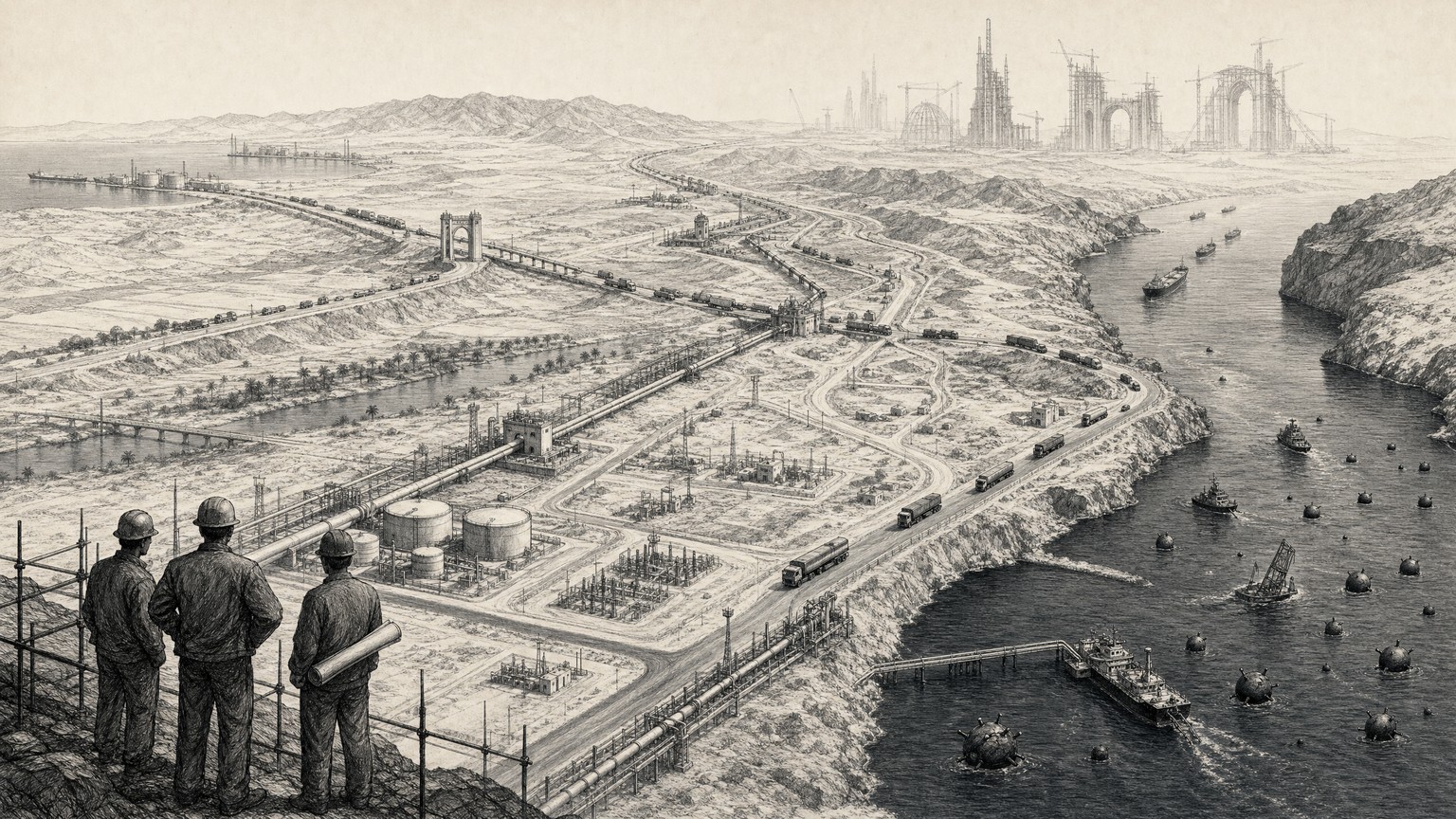
Consider what was committed, not what was said. The UAE's Hormuz bypass pipeline was reported twice this week as being extended beyond crude to refined fuel products — a material expansion of scope that converts a crisis hedge into a permanent piece of energy infrastructure, and a statement that Abu Dhabi treats strait disruption as a planning baseline. The UK and France finalised a postwar mine-clearing mission for Hormuz, which is an explicit governmental admission that there is no clean reopening: even a signed deal triggers a remediation phase during which transit risk and insurance premiums stay elevated. US Energy Secretary Chris Wright said publicly on 11 June that Hormuz flows will take months to recover — a named cabinet officer contradicting the more optimistic read from an unnamed official in the same news cycle. When the people responsible for clearing the strait and managing the energy system all describe a long tail, the reopening trade has a duration problem the market has not priced.
The disruption baseline itself justifies their posture. Hormuz traffic collapsed to five commercial transits on 6 June — functionally closed — on day 87 of the crisis, with OPEC output at a 37-year low. Eighty-seven days is long enough to force permanent adaptation, and the adaptation is now observable in revenue, not rhetoric. Saudi jet fuel exports to Europe exceeded pre-closure levels this week, proving alternative routing works at commercial scale. The Economist reported that Syria's new government is earning transit revenue from the revived Iraq-Mediterranean oil route — the first operational data point converting the land-corridor thesis from concept to cash flow. The World Bank approved $900 million for Iraqi road corridors in the same week, putting multilateral capital behind overland connectivity precisely as the maritime route fails. Meanwhile Gulf LNG exporters are institutionalising shadow-fleet tactics and dark transits rather than waiting for normalisation — workarounds becoming infrastructure.